-
Courses
Courses
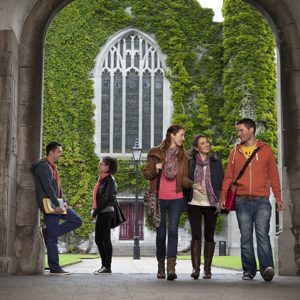
Choosing a course is one of the most important decisions you'll ever make! View our courses and see what our students and lecturers have to say about the courses you are interested in at the links below.
-
University Life

University Life
Each year more than 4,000 choose University of Galway as their University of choice. Find out what life at University of Galway is all about here.
-
About University of Galway
About University of Galway
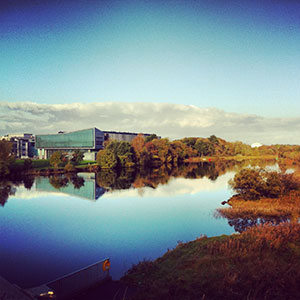
Since 1845, University of Galway has been sharing the highest quality teaching and research with Ireland and the world. Find out what makes our University so special – from our distinguished history to the latest news and campus developments.
-
Colleges & Schools
Colleges & Schools
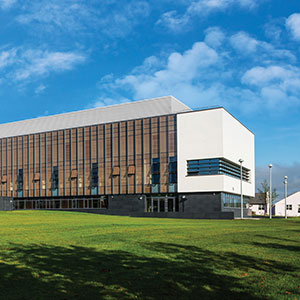
University of Galway has earned international recognition as a research-led university with a commitment to top quality teaching across a range of key areas of expertise.
-
Research & Innovation

Research & Innovation
University of Galway’s vibrant research community take on some of the most pressing challenges of our times.
-
Business & Industry
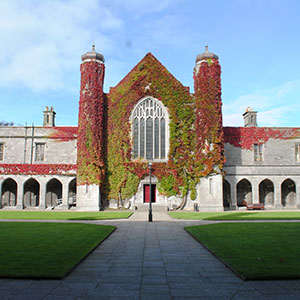
Guiding Breakthrough Research at University of Galway
We explore and facilitate commercial opportunities for the research community at University of Galway, as well as facilitating industry partnership.
-
Alumni & Friends

Alumni & Friends
There are 128,000 University of Galway alumni worldwide. Stay connected to your alumni community! Join our social networks and update your details online.
-
Community Engagement
Community Engagement
At University of Galway, we believe that the best learning takes place when you apply what you learn in a real world context. That's why many of our courses include work placements or community projects.
 Accessibility & Language
Bachelor of Science (Agricultural Science)

Bachelor of Science (Agricultural Science)
College of Science and Engineering- Title of Award
- Bachelor of Science
- CAO Code
- GY322
- CAO Points
- 410 (2026)
- Average Intake
- 20-30
- Delivery
- On Campus
- NFQ
- Level 8
- QQI/FET/FETAC Places
- 4
- Award Type
- Major
- Next Intake
- September 2027
- Duration
- 4 years
Why Choose This Course?
Course Information
The multi-trillion euro global agrifood sector is the largest contributor to economic development globally, and underpins rural employment and livelihoods. However, the environmental impacts of food production must be dramatically reduced, and new opportunities are emerging for farmers to diversify activities and income streams as society accelerates towards a climate neutral and circular bioeconomy. This exciting new four-year BSc is for the next generation of agrifood professionals who will need to deliver food security in a rapidly changing world. The multidisciplinary teaching team, based in the University of Galway and Teagasc, comprises internationally recognised research leaders in animal science, plant science, agri-sustainability and the bioeconomy.
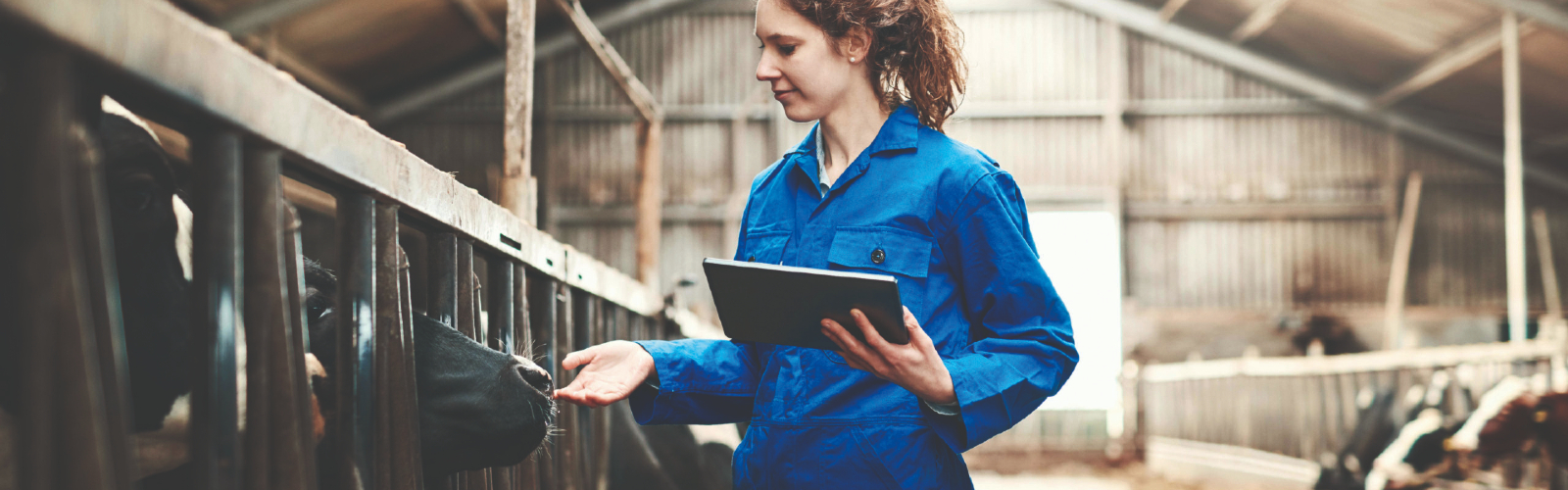
Through practical skills training at Teagasc centres in Athenry, Grange, Moorpark and Oak Park, multiple farm demonstrations, and a 12-weeek farm placement, Agricultural Science at the University of Galway provides a strong foundation in the fundamentals of animal and crop science. This is coupled with rigorous training in quantitative systems analysis necessary to navigate farming through the biophysical and regulatory constraints that the sector will face as society deals with the evolving climate and biodiversity crises.
In addition to core technical knowledge and skills for agricultural science, the course includes state-of-the-art training in geographic information systems (GIS) to manage spatial data, carbon foot-printing of farms and entire food value chains to understand emissions sources and abatement measures, and farm business management. Through guest lectures from industry and academic leaders, and access to advanced agriculture and land use software models, students are exposed to important perspectives on what climate-neutral farming could look like in Ireland. Final year students are tasked with developing a 10-year plan for their placement organisation, incorporating technical knowledge of farming practises, business planning, emission abatement measures and an assessment of diversification options in the context of farm succession planning. This course provides essential knowledge and skills for the next generation of successful farmers, farm advisors, land managers and other agrifood professionals, civil or public servants, scientific researchers and educators.
[an error occurred while processing this directive]
Agricultural Science at the University of Galway has been Green Cert accredited, so that graduates are recognised as qualified young farmers by the Department of Agriculture, Food and the Marine. Some graduates have gone directly into farming.
Graduates have gone straight into Farm Advisory Scheme and ACRES advisory roles.
University of Galway Agricultural Science students have been selected for internships with the Department of Agriculture, Food and the Marine and Teagasc.
Past graduates have secured prestigious fully funded scholarships for international PhD and MSc courses.
A new Professional Master of Education (PME) for Agricultural Science teaching at Leaving Cert level has been introduced at university of Galway to cater for high demand for this teacher training pathway from our Agricultural Science BSc graduates.
Emphasis on systems-thinking, problem-solving, effective communication and sustainability measurement underpins a wealth of potential career pathways.
Students have the possibility of undertaking their agri-business placement abroad.
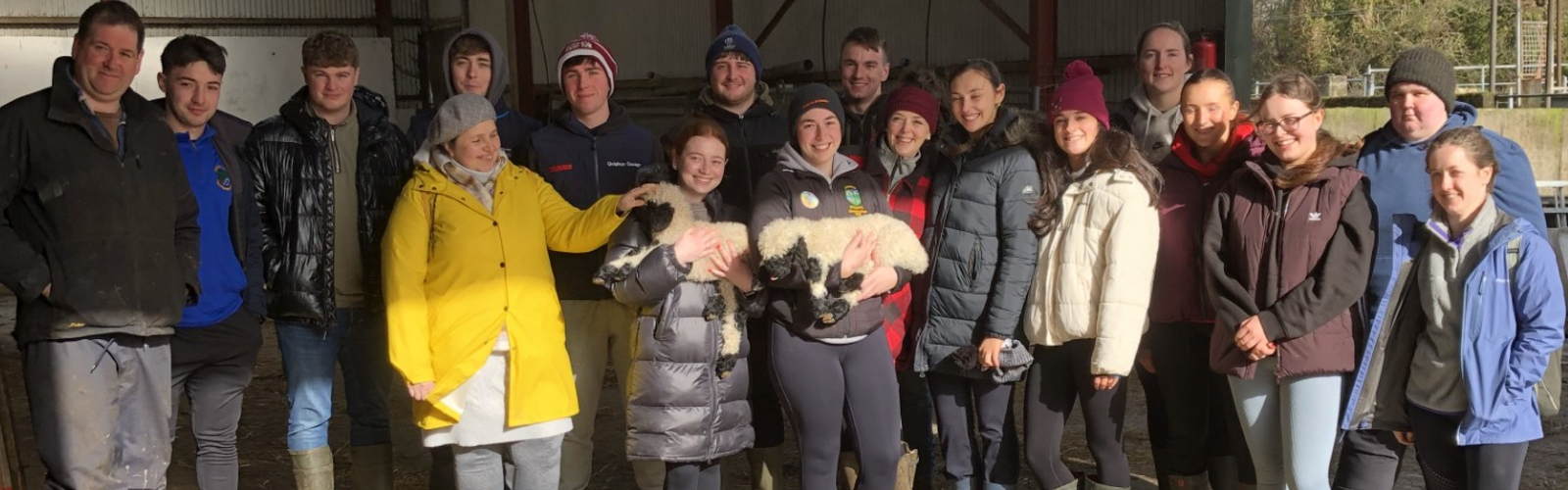
In Year Three, students spend a semester on work placement, usually on a farm but potentially in another agri-food enterprise if they can demonstrate prior farm work experience and access to farm data.
- David Styles
- Galina Brychkova
- Sinead Waters
- David Kenny
- Peter McKeown
- Anne Mullen
- Cathal O’Donoghue
- Dr Kate Keogh
This new programme builds on University of Galway’s established reputation for excellent teaching and research across agri-biosciences and sustainability. The course is delivered by internationally-recognised research leaders in animal science, agri-sustainability and the bioeconomy, ensuring students are provided with the cutting-edge knowledge and skills necessary to navigate the agrifood and land sector through challenging times ahead. Co-delivery of technical modules with Teagasc provides a strong foundation in agricultural science training. But what set this Level 8 degree apart from other courses is the strong focus on multi-scale systems thinking to explore sustainable and resilient future pathways for Ireland’s agrifood sector - in the context of growing global demand for food and bio-based resources for the bioeconomy, yet within the constraints imposed by climate, biodiversity and water quality regulations.
This course provides the essential breadth of perspectives and skills to tackle those challenges head on, forming the next generation of agrifood leaders, advisors, educators and policy makers.
Ashla Ward
School of Biological & Chemical Sciences
E: ashla.ward@universityofgalway.ie
Accreditations & Awards

I chose the course because I wanted to learn how to make food systems more sustainable. Learning how to model carbon footprints is a massive advantage, given how central sustainability metrics are now.
Gerard Madden
Funded PhD scholar, University of Glasgow

I chose to study the Agricultural Science level 8 programme at the University of Galway because I come from a farming background, and I knew I wanted a career in science. The content of the course itself includes lab work, global development, animal systems and an Agri placement. Each module was up to date, interesting and relevant, all delivered by highly motivated lecturers and researchers. I enjoyed all aspects of the course and would recommend it to anyone with an interest in the future of the agri-food sector.
Roisin Treacy
Bachelor of Science(Agricultural Science)

Studying Agricultural Science at the University of Galway was an extremely rewarding experience which helped shape both my academic interests and career ambitions.
Rachel Quinn
Erasmus Mundus funded MSc student in Animal Biodiversity and Genomics, NMBU Norway and UGOE Germany
Meet our Employers






Entry Requirements and Fees
Minimum Grade H5 in two subjects and passes in four other subjects at O6/H7 level in the Leaving Certificate, including Irish, English, Mathematics, a laboratory science subject (i.e., Chemistry, Physics, Biology, Physics with Chemistry (joint), Computer Science or Agricultural Science) and any two other subjects recognised for entry purposes.
Alternative Pathways
The Access Centre at University of Galway provides a number of alternative entry routes to undergraduate programmes. See below some useful links:
QQI/FET/FETAC Places
There are 4 places available on Bachelor of Science (Agricultural Science) (GY322) . Holders of recognised QQI (FETAC Level 5/6) qualifications in any of the following awards who achieve a minimum of five distinctions, may be admitted on a competitive basis to Year One:
Eligible Awards:
5M3807/CASLT Laboratory Techniques CELTX Electronic Technology
CITXX Information Technology
*Additional Conditions: only those applicants with a Distinction (80% or better) in a minimum of five modules in the qualification, which must include distinctions in the modules 5N1833/C20139 Mathematics or C20174 Mathematics for Engineering or C20175 Mathematics for Computing or 5N18396 Mathematics for Information Technology and three of the following modules will be considered for entry to first year of Science courses listed above:
5N2746/C20006 Biology
5N2747/C20011 Chemistry
C20012 Computer Architecture and Systems
C20013 Computer Programming 5N1606/C20016
Electronics 5N1774/C20018 Electronics-Digital
5N2751/C20033 Laboratory Techniques
5N1638/C20040 Mechanics
5N1460/C20048 Physics
Or one of: 5N0783/B20012 Database Methods or 5N1977/B20028 Spreadsheet Methods.
Eligible Awards:
5M0529 Software Development
5M0536 Computer Systems and Networks
*Additional Conditions: only those applicants who achieve a Distinction (80% or better) in the Maths for Information Technology module (5N18396) and 4 further Distinctions, 3 of which must be in any of the following modules covering both courses will also be considered for entry to first year of Science courses listed above:
5N0541 Fundamentals of Object Oriented Programming
5N0548 Computer Systems Hardware
5N0583 ICT Security Policy and Management
5N0690 Communications
5N2928 Operating Systems
5N2772 Software Architecture
5N2927 Programming and Design Principles
5N2929 Networking Essentials
Eligible Award:
5M5267 - Food Science
*Additional Conditions: only those applicants who achieve a Distinction (80% or better) in the Mathematics module (5N1833/C20139/ 5N18396) and 4 further Distinctions, 3 of which must be in any of the following modules will also be considered for entry to first year of Science courses listed above:
5N0737 Microbiology 5N2748 Food Chemistry 5N1460 Physics
5N2006 Nutrition 5N2746 Biology 5N2747 Chemistry
Other Qualifications
If you are a school leaver presenting results other than Leaving Cert results, please review the entry requirements relevant to you:
For applicants whose first language is not English, it is important to check our English Language Requirements.
Admissions Office
Our Admissions Office provides additional detail relevant to CAO applicants including key dates, FAQs and instructions for non-school leavers.
Irish and European (EU/EFTA/UK) Applicants
Apply via the CAO. See the CAO Handbook for useful information on applying through the CAO.
Mature Applicants
Apply via the CAO by 1 February. To apply for a place as a mature student, you must be 23 years of age on or before 1 January of the year of entry. Further information available here.
QQI/FET/FETAC Applicants
Apply via the CAO. See our QQI/FET/FETAC Applicants page for information on places available and entry requirements.
Fees for Academic Year 2027/28
| Course Type | Year | EU Tuition | Student Contribution | Non-EU Tuition | Levy | Total Fee | Total EU Fee | Total Non-EU Fee |
|---|---|---|---|---|---|---|---|---|
| All | €7268 | €0 | €29400 | €150 | €150 | €7418 | €29550 |
- Most EU students applying through the CAO will be eligible for the ‘Free Fees Initiative’. You can find out more here.
- If you are eligible for a means tested SUSI grant this may cover 100% of this Student Contribution Charge. If you are 100% eligible SUSI will pay the Student Contribution Charge of €2,500 on your behalf.
- The Student Levy It is payable by all students and it is not covered by SUSI
- You can find additional detail on the Fees Office webpage including FAQs and how fee status is assessed.
Application Process
Students applying for full undergraduate degree programmes from outside of the European Union (EU), and who are liable for full non-EU tuition fees, should apply online via Apply to University of Galway. Our application portal opens on the 1st October each year for each the following September.
Further Information
Please visit the international application webpage for further information on closing dates, documentation requirements, application fees and the application process.
Why University of Galway?
World renowned research led university nestled in the vibrant heart of Galway city on Ireland's scenic West Coast.
Contact the College of Science and Engineering
University of Galway, University Road, Galway, Ireland, H91 TK33


Downloads
Meet Our Alumni
Course Introduction
The BSc in Agricultural Science at the University of Galway is designed to prepare the next generation of agrifood professionals to meet the demands of a changing world. As the global agrifood sector faces increasing environmental, economic, and geopolitical challenges, alongside demands for novel bio-based products to replace dependence on imported and polluting commodities. Social licence and subsidies are increasingly tied to the delivery of ecosystem services through landscape management. Shifts toward a climate-neutral, circular bioeconomy, this This four-year degree equips students with the scientific, technical, and business skills needed to drive sustainably profitable e and resilient farming in an uncertain future.