-
Courses
Courses
Choosing a course is one of the most important decisions you'll ever make! View our courses and see what our students and lecturers have to say about the courses you are interested in at the links below.
-
University Life
University Life
Each year more than 4,000 choose University of Galway as their University of choice. Find out what life at University of Galway is all about here.
-
About University of Galway
About University of Galway
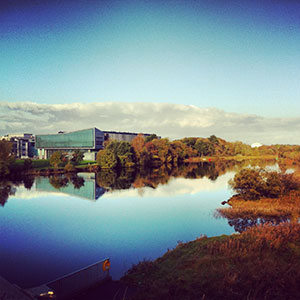
Since 1845, University of Galway has been sharing the highest quality teaching and research with Ireland and the world. Find out what makes our University so special – from our distinguished history to the latest news and campus developments.
-
Colleges & Schools
Colleges & Schools
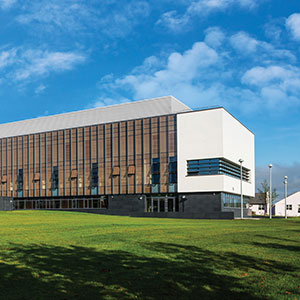
University of Galway has earned international recognition as a research-led university with a commitment to top quality teaching across a range of key areas of expertise.
-
Research & Innovation
Research & Innovation
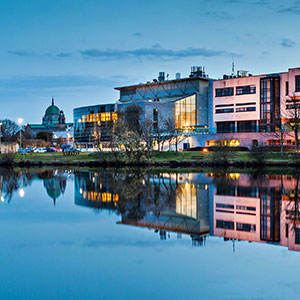
University of Galway’s vibrant research community take on some of the most pressing challenges of our times.
-
Business & Industry
Guiding Breakthrough Research at University of Galway
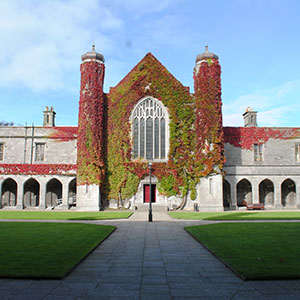
We explore and facilitate commercial opportunities for the research community at University of Galway, as well as facilitating industry partnership.
-
Alumni & Friends
Alumni & Friends
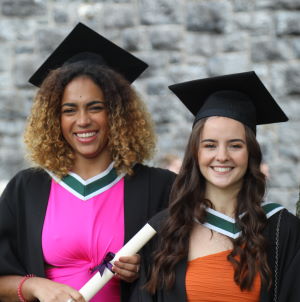
There are 128,000 University of Galway alumni worldwide. Stay connected to your alumni community! Join our social networks and update your details online.
-
Community Engagement
Community Engagement
At University of Galway, we believe that the best learning takes place when you apply what you learn in a real world context. That's why many of our courses include work placements or community projects.
 Accessibility & Language
Sustainable Environments (MSc)
MSc (Sustainable Environments)
College of Science and Engineering- Title of Award
- Master of Science
- Course Code
- MSC-SEV
- Average Intake
- 15
- Delivery
- On Campus
- NFQ
- Level 9
- Award Type
- Major
- Next Intake
- 46660
- Duration
- 1 year, full-time
- ECTS Weighting
- 90 ECTS
Why Choose This Course?
Course Information
This multidisciplinary course integrates and evaluates environment, health, and sustainability issues within the natural and built environment. The course structure is based on a 90 ECTS model, consisting of 60 ECTS from taught modules and a 30 ECTS research project.
The curriculum combines theory, policy, and practical experience. It offers research-led learning opportunities aimed at developing skills in identifying and evaluating sustainable solutions for real-world environmental problems. Students are encouraged to adopt an informed, creative, and innovative approach to problem-solving through scene setting lectures, site visits, and practical work.
[an error occurred while processing this directive]
- Unique Combined Focus: Are you interested in conserving nature, promoting resilience and developing innovative solutions to the global environmental crisis? Do you want to learn from inspiring architects, engineers, planners and ecologists and experience real-life examples? If you want to learn how to evaluate difficult choices and make sustainable decisions, the MSc Sustainable Environments is the course for you.
- Futures impacts: Graduates have gone on to forge careers in making developments more sustainable or conserving nature and managing ecosystems, or work with communities to find solutions to global challenges at a local level.
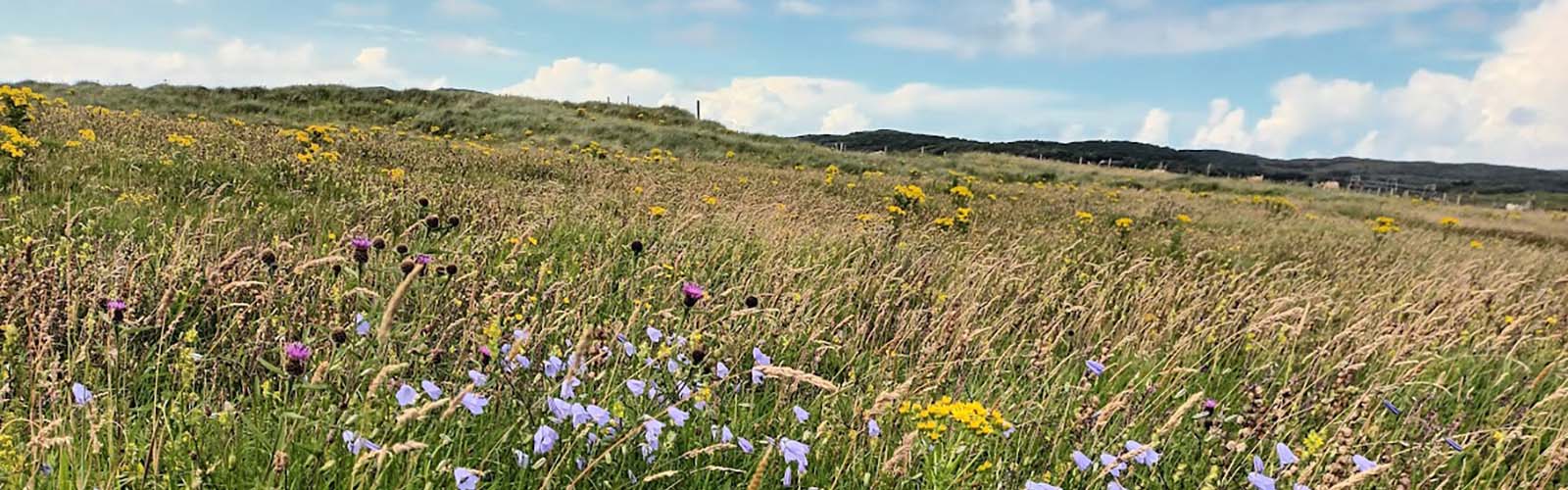
- Proximity to nature-rich sites; including biodiverse campus for field classes: Given our campus stretches along the River Corrib, our protected and nature-rich campus is our living lab. As well as Lough Corrib, we can easily access high nature value sites along the western seaboard, such as the Burren, and Connemara. Students receive hands-on practical experience, including field and laboratory work, such as environmental sensitivity mapping.
- Industry-Informed Design: The course structure was developed based on consultation with prospective employers in both the private and public sectors.
- Cross-Sector Employability: The program provides training in cross-sector skills and competences that support national and international occupational mobility and enable graduates to work in and lead multidisciplinary teams, and make an impact in the sustainability sector.
- Policy and Legislation: Training provides comprehensive knowledge regarding international directives and national legislation that apply from land to sea, and the legal frameworks that underpin them.
- Scientific Leadership: The curriculum is designed to develop the capacity and capability for scientific leadership and solution-focussed approaches relevant to graduates' career trajectories.
Graduates with this qualification pursue diverse careers in the public, private, and voluntary sectors. There is a wide range of job opportunities available.
Sample Roles and Sectors:
- Sustainability Advisors: Including roles such as sustainable transport advisors, sustainable city advisors, sustainable housing advisors, and sustainable energy advisors.
- Consultancy: Graduates work in environmental, agri-environmental, and sustainability consultancies.
- Government/Policy: Employment opportunities exist within national, regional, and local government sectors, as well as roles in policy development.
- Education: Graduates go on to work in sustainability education.
- Corporations: Sustainability or biodiversity officers in companies and corporations.
The course provides graduates with the competences necessary to obtain employment in environmental consultancy and policy development. Graduates also have the option to proceed to further research (PhD level).
How will I learn?
Students benefit from research-led learning opportunities. The learning experience encourages an informed, creative, and innovative approach to problem solving. Learning includes:
- Scene setting lectures, site visits, and practical work.
- Field trips to learn from the practical experience of professionals are an essential element.
- Opportunities to experience challenges in the campus and in the field.
- Students develop competencies in both individual and group-based project scoping, development, and conclusion. They also maintain a reflective journal to manage, assess, and reflect on their learning process.
How Will I Be Assessed?
Assessment is module specific but is primarily conducted through continual assessment, assignment, and project work. The overall combination of coursework and assessments provides a rational balance for students to excel. The major assessment component is the 30 ECTS Research Project in Semester 3.
Course queries:
helena.martin@universityofgalway.ie
Programme Director(s):
Dr Caitriona Carlin/Dr Robert Kennedy
School of Natural Sciences and the Ryan Institute
College of Science and Engineering
E: caitriona.carlin@universityofgalway.ie/bob.kennedy@universityofgalway.ie
University of Galway recognises that knowledge and skills can be acquired from a range of learning experiences. This is in line with the National Framework of Qualifications (NFQ) goals which aim to recognise all learning achievements by supporting the development of alternative pathways to qualifications (or awards) and by facilitating the recognition of prior learning (RPL).
The Programme Board for Sustainable Environments will consider non-standard applications, where both the appropriate discipline and required relevant experience are at the discretion of the Programme Board.
Further information is available on the University’s Recognition of Prior Learning website
Graduates of the MSc in Sustainable Environments will acquire key knowledge and transferable skills that they can utilize in any workplace, whether in academia or industry. Graduates develop the capacity for scientific leadership and solution-based approaches. Key skills include:
- Advanced problem solving, management, analytical and communication skills.
- The ability to apply analytical and technical skills required for research and application in a range of ecosystems.
- Planning, organising and controlling activities to ensure successful project completion.
- Data assessment skills necessary to inform decision-making and management.
- Communicating results of monitoring, research and innovation, and engaging the public on biodiversity literacy.
- Transversal and multidisciplinary skills essential for national and international occupational mobility.
Accreditations & Awards

The support and guidance I received while completing the MSc. in Sustainable Environments was excellent. The course content provided me with an enlightened perspective on the relationship between human beings and the wider living world of which we are a part. In a time of climate and ecological crises, understanding the connection between human and environmental resilience is essential for graduates wishing to participate in the creation of a post-growth-dependent world.
Irene Ní Shuilleabháin
Green Campus Greenshoots Coordinator, UCC and Ecology & Education Impact Lead at Habitats
Meet our Employers



Entry Requirements and Fees
Minimum Entry Requirements
Usually, 2.1 honours (or equivalent) in a related subject area is the minimum academic standard, though 2.2 students (or equivalent) with relevant experience will also be considered. The Programme Board will consider non-standard applications. The appropriate discipline and required relevant experience are at the discretion of the Programme Board.
Academic entry requirements standardised per country are available here.
English Language Entry Requirements
For applicants whose first language is not English, an English language proficiency of IELTS score of 6.5 is required (with no less than 6.5 in Writing and no less than 6.0 in any other band) or equivalent.
More information on English language test equivalency are available here.
Supporting Documents
You will be required to provide supporting documentation as part of your application. You can check here what supporting documents are required for this course.
You can apply online to the University of Galway application portal here.
Please review the entry requirements set out in the section above.
You will be required to upload supporting documentation to your application electronically. See the section above on entry requirements for further information on the supporting documentation required for this course.
Closing Dates
For this programme, there is no specific closing date for receipt of applications. Applications will be accepted on a rolling basis and course quotes will be reviewed continuously throughout the application cycle.
Notes
- You will need an active email account to use the website and you'll be guided through the system, step by step, until you complete the online form.
Browse the FAQ's section for further guidance.
Fees for Academic Year 2027/28
| Course Type | Year | EU Tuition | Student Contribution | Non-EU Tuition | Levy | Total Fee | Total EU Fee | Total Non-EU Fee |
|---|---|---|---|---|---|---|---|---|
| Masters Full Time | 1 | €9150 | €0 | €29300 | €150 | €150 | €9300 | €29450 |
This scholarship is valued at €1,500 for EU students applying for full-time taught master's postgraduate courses. You will be eligible if:
- You have been accepted to a full-time taught master's course at University of Galway,
- You have attained a first class honours (or equivalent) in a Level 8 primary degree.
An application for the scholarship scheme is required (separate to the application for a place on the programme). The application portal for 2026 is now open and available here. Applications will close on the 30th September 2026. Full details available here.
Global Scholarships (standard text for all courses)
University of Galway offers a range of merit-based scholarships to students from a number of countries outside of the EU. Visit here for schemes currently available.
Students applying for full time postgraduate programmes from outside of the European Union (EU), You can apply online to the University of Galway application portal here.
Our application portal opens on the 1st October each year for each the following September.
Further Information
Please visit the postgraduate admissions webpage for further information on closing dates, documentation requirements, application fees and the application process.
Why University of Galway?
World renowned research led university nestled in the vibrant heart of Galway city on Ireland's scenic West Coast.
Contact the College of Science and Engineering
University of Galway, University Road, Galway, Ireland, H91 TK33


Downloads
Meet Our Alumni
Course Introduction
The MSc in Sustainable Environments is a multidisciplinary course providing students with insight into environment, health, and sustainability issues within urban and rural environments. It integrates ecological, health, and sustainability issues and combines modules from Environmental Science, Engineering, and Economics. The curriculum offers an enlightened perspective on our role, and our relationships within the wider living world, equipping graduates with the skills and knowledge needed to pursue successful careers in managing sustainable environments.