-
Courses

Courses
Choosing a course is one of the most important decisions you'll ever make! View our courses and see what our students and lecturers have to say about the courses you are interested in at the links below.
-
University Life

University Life
Each year more than 4,000 choose University of Galway as their University of choice. Find out what life at University of Galway is all about here.
-
About University of Galway

About University of Galway
Since 1845, University of Galway has been sharing the highest quality teaching and research with Ireland and the world. Find out what makes our University so special – from our distinguished history to the latest news and campus developments.
-
Colleges & Schools
Colleges & Schools
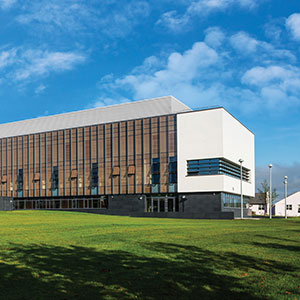
University of Galway has earned international recognition as a research-led university with a commitment to top quality teaching across a range of key areas of expertise.
-
Research & Innovation

Research & Innovation
University of Galway’s vibrant research community take on some of the most pressing challenges of our times.
-
Business & Industry
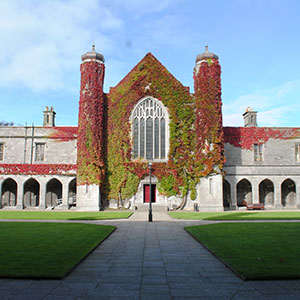
Guiding Breakthrough Research at University of Galway
We explore and facilitate commercial opportunities for the research community at University of Galway, as well as facilitating industry partnership.
-
Alumni & Friends

Alumni & Friends
There are 128,000 University of Galway alumni worldwide. Stay connected to your alumni community! Join our social networks and update your details online.
-
Community Engagement

Community Engagement
At University of Galway, we believe that the best learning takes place when you apply what you learn in a real world context. That's why many of our courses include work placements or community projects.
 Accessibility & Language
Biomedical Genomics (MSc)


MSc (Biomedical Genomics)
College of Science and Engineering- Title of Award
- Master of Science
- Course Code
- MSC-BMG
- Average Intake
- 15
- Delivery
- On Campus
- NFQ
- Level 9
- Award Type
- Major
- Next Intake
- September 2027
- Duration
- 1 year Full-time
- ECTS Weighting
- 90 ECTS
Why Choose This Course?
Course Information
Who is this course for?
Clinical applications of genomics are at the forefront of precision medicine. It is now possible to diagnose rare genetic diseases from genomic sequence data, while the sequencing of tumours has become an important means of refining therapeutic choices in cancer treatment. This has led to a growing need for scientists, who can both analyse genomic data and interpret the results, based on a strong understanding of biological and clinical contexts.
Students enrolled in this programme may acquire some practical skills in the generation of genomic data using the latest sequencing technologies, but the main emphasis will be on learning the computational and statistical techniques needed to analyse genomic data.
What will is study?
The course comprises 90 credits, with 60 credits obtained from taught modules, and the remaining 30 credits from a research project, which is done on an individual basis under the supervision of an academic.
Students will enrol in five core modules—all with focus on genomics—and a range of optional modules, all with focus on foundational skills relevant to biomedical genomics. The set of optional modules available to students is designed to deepen and widen acquired knowledge in the quantitative or computational sciences.
Taught modules will be completed by the end of Semester 2 and will consist of 20 credits of core modules and 40 credits of optional modules.
From the end of Semester 2, the student will focus on a full-time basis on an individual research project.
Core modules:
- Genomics at Scale
- Genomics Techniques I
- Genomics Research Methods
- Pathogen Genomic Epidemiology & Surveillance
- Genomics Project
Optional Modules may include:
- Introduction to Molecular & Cellular Biology
- Graduate Course in Basic & Advanced Immunology
- Medical Genomics I: Genomics of Common & Rare Diseases
- Medical Genomics II: Genomics of Cancer
- Genomics Data Analysis I
- Genomics Data Analysis II
- Genomics Professional Experience
- Mathematical Molecular Biology II
- Introduction to Bioinformatics
- Probabilistic Models for Molecular Biology
- Statistics for Health Science Data
- Statistical Computing for Biomedical Data
- Introduction to Bayesian Modelling
- Machine Learning & Deep Learning for Genomics
- Introduction to Programming
- Networks
- Data visualization
- Web and Network Science
[an error occurred while processing this directive]
- Master core concepts: Acquire the quantitative and computational skills needed to analyse big datasets generated using the latest genomics techniques
- Enhance your analytical skills: Develop your ability to interpret and analyse data using the latest AI and machine learning tools and methodologies
- Wide range of optional modules: Enables you to choose what skills you want to focus on developing.
- Research Project: Apply the knowledge and skills developed during taught modules to tackle an innovative research project
- Strengthen problem-solving abilities: Learn to approach the analysis of large genomics datasets using both theoretical and practical perspectives.
- Develop professional expertise: Hone the skills required to succeed in diverse roles, including project management, teamwork, research data management, and time management.
- Improve communication skills: Learn to effectively present problems, solutions, and discoveries to a range of audiences, from stakeholders to decision-makers.
- Develop highly sought after skills: The skillsets you will develop are not only applicable to the field of genomics but to any profession with big data science at its core.
With a focus on developing a highly marketable combination of computational and analytical skills, as well as specialist knowledge on how to apply these skills to analyse large biological datasets, this degree will prepare graduates for a wide range of exciting careers in the pharmaceutical Industry, healthcare settings and research organisations.
As advances in precision medicine take hold, it is anticipated that the need for genomic scientists in healthcare, the pharmaceutical industry, and academic research organizations will continue to rise, leading to opportunities for employment within each of these areas. The data analytics skills acquired will also allow graduates to transition to data scientist roles outside of genomics.
Industry-Relevant Modules like Statistics for Health Science Data and Data Visualization will give graduates the skills employers are looking for in today's data-intense environment.
A Biomedical Genomics MSc also provides a solid base for further study and research and is a gateway to progress onto a PhD. Graduates have gone on to further research at PhD level, ultimately acquiring positions as lecturers and researchers in third level institutions.
Graduates have also found employment in a range of companies as data scientists and health data analysts, data managers, bioinformaticians, clinical data analysts, managers, consultants and computational biologists. Our graduates fill key posts in the state sector, academia and research and development and recent graduates of this course have gone on to work for companies including:
- Data Scientist, Pfizer
- Data Scientist, Abbott
- Data Scientist, Deloitte
- Bioinformatician, Enfer Labs
- Bioinformatician, Zinto Labs
- Bioinformatician, Icahn, School of Medicine, Mt Sinai, New York
- Bioinformatics Analyst, Plusvital
- Genomics Data Scientist, Genomics England
- Clinical Data Engineer, ICON
- Clinical Bioinformatician, National Virus Reference Laboratory
- QC Manager, Bristol-Myers squibb
- Dr Leonel Herrera-Alisia
- Dr Andrew Flaus
- Dr Lars Jermiin
- Dr Pilib O’Broin
- Professor Cathal Seoighe
- Dr Gregory Wheeler
- Dr Haixuan Yang
How will I learn?
The MSc in Biomedical Genomics combines innovative teaching methods with practical, hands-on learning to ensure a comprehensive educational experience. You will learn through a mix of interactive lectures, seminars and workshops led by expert faculty. Real-world case studies, data-driven projects and coding exercises will enable you to apply theoretical knowledge to practical problems.
Collaborative activities will enhance your teamwork and communication skills, while individual assignments and the final dissertation will help you develop independence and critical thinking.
Throughout the programme, you will have access to cutting-edge resources, including industry-standard software and real-world datasets, to support your learning and professional growth
How Will I Be Assessed?
Students are formally assessed through a variety of both continuous assessment and end-of-semester written examinations. Continuous assessment will include written assignments, programming exercises, analysis of genomic data, group and individual presentations, and case studies, while assessment of the Research Project includes examination of a thesis (written in the form of a research paper), as well as oral presentations, and participation in a research seminar series. The assessment components and their weights vary from module to module, but generally include:
- Continuous Assessment—Regular coursework, including assignments, presentations and in-class tests. Students receive regular feedback on their progress.
- Examinations— Written exams take place before Christmas and in April/May.
- Project Work— Research projects allow students to apply their skills in real-world contexts and the research project thesis and presentation accounts for 33% of the final mark.
Course queries:
lars.jermiin@universityofgalway.ie
Programme Director(s):
Dr Lars Jermiin
Lecturer in Evolutionary Bioinformatics
School of Mathematical & Statistical Sciences
College of Science and Engineering
E: lars.jermiin@universityofgalway.ie
T: +353 91 49 28 96
Graduates of the MSc in Biomedical Genomics will be able to:
- Apply statistical and computational methods to analyse complex datasets.
- Use programming languages such as Python or R to develop reproducible workflows.
- Critically evaluate scientific literature and integrate evidence to inform research questions.
- Design, plan, and manage research projects to completion.
- Communicate scientific findings clearly in written reports, presentations, and discussions.
- Collaborate effectively in interdisciplinary teams across biological, clinical, and computational domains.
- Interpret genomic data within relevant biological and clinical contexts.
- Demonstrate strong time-management and independent working skills in research settings.
- Adhere to ethical, legal, and professional standards in handling and analysing data.
- Visualise and present complex datasets using appropriate computational tools
Accreditations & Awards


My undergrade was in industrial biochemistry, so my background was lab-based and focused on biopharmaceutical development. I became interested in this MSc after learning about the potential of precision medicine. The short course format effectively brings everyone to a standard level in biology, coding and the maths behind genomics. With limited computer science or maths experience, I found it challenging, but the small class size provided constant support. The skills gained apply broadly to genomics and data science, and with demand growing, I’d recommend this course for career transition.
Eamon McAndrew
MSc Biomedical Genomics Graduate

My advice would be to not be afraid of the challenge of branching into new scientific disciplines. Despite the fact that I would not have considered myself a suitable candidate for computer based research it is now the career path I am enthusiastically pursuing thanks to the training and encouragement of the course contributors.
Sinead Cullina
Biostatistician II at Tempus AI
Meet our Employers





Entry Requirements and Fees
Minimum Entry Requirements
Applicants must have achieved a First or strong Second Class Honours degree (or equivalent) in a relevant discipline.
Qualifying degrees include, but are not limited to: biochemistry, biomedical science, genetics, and biotechnology.
Academic entry requirements standardised per country are available here.
English Language Entry Requirements
For applicants whose first language is not English, an English language proficiency of IELTS score of 6.5 is required (with no less than 6.5 in Writing and no less than 6.0 in any other band) or equivalent.
More information on English language test equivalency are available here.
Supporting Documents
You will be required to provide supporting documentation as part of your application. You can check here what supporting documents are required for this course.
You can apply online to the University of Galway application portal here.
Please review the entry requirements set out in the section above.
You will be required to upload supporting documentation to your application electronically. See the section above on entry requirements for further information on the supporting documentation required for this course.
Closing Dates
For this programme, there is no specific closing date for receipt of applications. Applications will be accepted on a rolling basis and course quotes will be reviewed continuously throughout the application cycle.
Notes
- You will need an active email account to use the website and you'll be guided through the system, step by step, until you complete the online form.
Browse the FAQ's section for further guidance.
Fees for Academic Year 2027/28
| Course Type | Year | EU Tuition | Student Contribution | Non-EU Tuition | Levy | Total Fee | Total EU Fee | Total Non-EU Fee |
|---|---|---|---|---|---|---|---|---|
| Masters Full Time | 1 | €9150 | €0 | €29300 | €150 | €150 | €9300 | €29450 |
Postgraduate students in receipt of a SUSI grant – please note an F4 grant is where SUSI will pay €4,500 towards your tuition (2026/27). You will be liable for the remainder of the total fee. A P1 grant is where SUSI will pay tuition up to a maximum of €6,270. SUSI will not cover the student levy.
Note to non-EU students: learn about the 24-month Stayback Visa here.
Postgraduate Excellence Scholarships
This scholarship is valued at €1,500 for EU students applying for full-time taught master's postgraduate courses. You will be eligible if:
- You have been accepted to a full-time taught master's course at University of Galway,
- You have attained a first class honours (or equivalent) in a Level 8 primary degree.
An application for the scholarship scheme is required (separate to the application for a place on the programme). The application portal is now open and available here. Applications will close on the 30th September 2026 Full details available here.
Global Scholarships
University of Galway offers a range of merit-based scholarships to students from a number of countries outside of the EU. Visit here for schemes currently available.
Application Process
Students applying for full time postgraduate programmes from outside of the European Union (EU), You can apply online to the University of Galway application portal here.
Our application portal opens on the 1st October each year for each the following September.
Further Information
Please visit the postgraduate admissions webpage for further information on closing dates, documentation requirements, application fees and the application process.
Why University of Galway?
World renowned research led university nestled in the vibrant heart of Galway city on Ireland's scenic West Coast.
Contact the College of Science and Engineering
University of Galway, University Road, Galway, Ireland, H91 TK33


Downloads
Meet Our Alumni
Data-driven insights to power precision medicine
As genomics reshapes precision medicine, demand grows for experts who can analyse and interpret genomic data. Genomics is the driving force for precision medicine, enabling rare-disease diagnosis and personalised cancer care. A Biomedical Genomics MSc will equip students with the skills to analyse genomic data, and to interpret results with the biological and clinical insight the field demands.