-
Courses
Courses
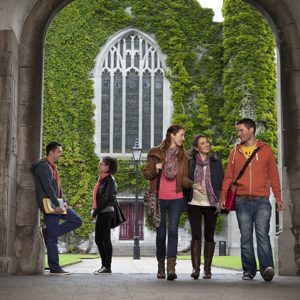
Choosing a course is one of the most important decisions you'll ever make! View our courses and see what our students and lecturers have to say about the courses you are interested in at the links below.
-
University Life
University Life
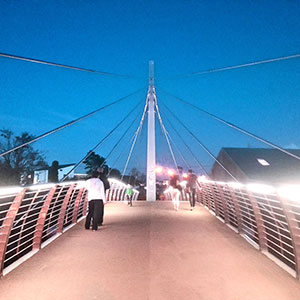
Each year more than 4,000 choose University of Galway as their University of choice. Find out what life at University of Galway is all about here.
-
About University of Galway
About University of Galway
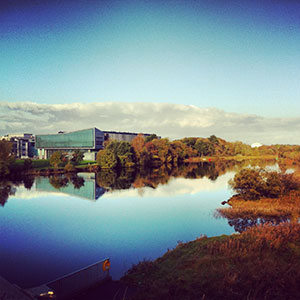
Since 1845, University of Galway has been sharing the highest quality teaching and research with Ireland and the world. Find out what makes our University so special – from our distinguished history to the latest news and campus developments.
-
Colleges & Schools
Colleges & Schools
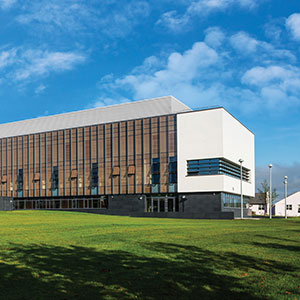
University of Galway has earned international recognition as a research-led university with a commitment to top quality teaching across a range of key areas of expertise.
-
Research & Innovation
Research & Innovation
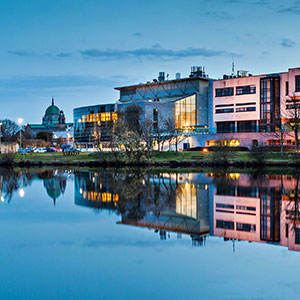
University of Galway’s vibrant research community take on some of the most pressing challenges of our times.
-
Business & Industry
Guiding Breakthrough Research at University of Galway
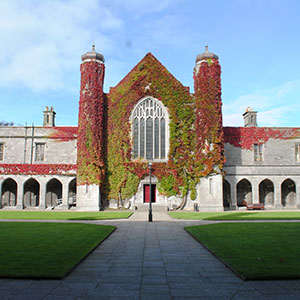
We explore and facilitate commercial opportunities for the research community at University of Galway, as well as facilitating industry partnership.
-
Alumni & Friends
Alumni & Friends
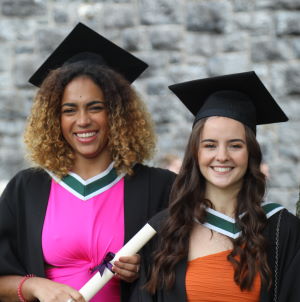
There are 128,000 University of Galway alumni worldwide. Stay connected to your alumni community! Join our social networks and update your details online.
-
Community Engagement
Community Engagement
At University of Galway, we believe that the best learning takes place when you apply what you learn in a real world context. That's why many of our courses include work placements or community projects.
 Accessibility & Language
Modern Methods of Construction (PgCert)
PgCert (Modern Methods of Construction)
College of Science and Engineering- Title of Award
- Postgraduate Certificate
- Course Code
- 1CNI8
- Average Intake
- 20
- Delivery
- On Campus
- NFQ
- Level
- Award Type
- Major
- Next Intake
- September 2027
Why Choose This Course?
Course Information
The course is delivered through blended learning, consisting of pre-recorded lectures, live online webinars (1 hour/week), live online workshops (2 hours/week), self-directed learning materials, online activities and extensive resources, and on campus sessions (full day every 8 weeks).
Each module will consist of: online materials and guided reading; weekly lectures with associated activities; and one full-day workshop with discussions.
Module 1: Sustainability Planning in Construction (10 ECTS)
This module will support the students, as the current/future construction sector stakeholders, in developing more sustainable construction processes and products, with a focus on areas of energy performance of buildings, retrofitting of existing structures, decarbonisation of construction processes and circularity. Finally, the module will introduce the concept of a just transition for the construction sector, where the needs of end users are understood and translated into new products and processes.
Module 2: Digital Construction Technologies (10 ECTS)
This module will cover the broad areas of building information modelling (BIM) technology, digital twinning, visualisation methods and their standard approaches within the construction sector. Digitalisation will fundamentally change the ways in which construction teams interact. Technologies such as BIM will seamlessly monitor the materials and products delivered to the construction site, in a manner that respects the need for sustainability and traceability. Furthermore, sensors will provide the data for digital twins and their incorporation into construction elements, thus the ability to analyse and exploit the large volumes of data is required. Furthermore, augmented reality technologies are beginning to be used for tasks such as site inspections, allowing continuous monitoring of construction process and conducting quality control checks with greater ease. Clash detection, has already been identified as a benefit of BIM, but recent developments in virtual reality and communication technologies will soon allow design teams to explore design issues from different locations. Technologies such as these will fundamentally change the way in which construction projects are managed and lead to new work processes. This module will engage with students to ensure they are fully prepared for the potential of these new work practices. This module is a science-based approach and key tools, methods and materials will be explored.
Module 3: Modern Methods of Construction (10 ECTS)
As part of this module, students will develop skills in MMC, as the sector moves rapidly towards Industry 4.0. The module will cover key areas of standardisation and routes to certification, next generation rapid build systems (off-site panelised and modular construction), automation and autonomous construction. This module is a science-based approach and key tools, methods and materials will be explored.
[an error occurred while processing this directive]
The course is designed to provide upskilling opportunities for graduates in industrial and commercial construction, construction technology, and in sustainable development sectors. It is also envisaged that graduates will take up leadership positions in the construction industry to lead change in the modernisation of the sector.
- The Postgraduate Certificate in Modern Methods of Construction equips students with key knowledge and skills needed to develop sustainable technological solutions to challenges facing the construction and built environment sector.
- The course supports the development of a modernised and sustainable construction sector underpinned by circular economy and climate action.
On successful completion, students will have enhanced skills in problem solving, research, communication, and innovative thinking. - Graduates will have communicated difficult ideas clearly and persuasively while understanding different points of view.
- Students will have looked at problems from diverse points of view and identified problems while formulating questions relevant to clarifying issues.
Graduates will have enhanced ability to support a position with argumentation and logic.
The course is designed to provide upskilling opportunities for graduates in industrial and commercial construction, construction technology and in sustainable development sectors. It is also envisaged that graduates will take up leadership positions in the construction industry to lead change in the modernisation of the sector.
This Post Graduate Programme is at level 9 of the National Qualifications Framework and is accredited by the University of Galway.
The course is delivered through blended learning, consisting of pre-recorded lectures, live online webinars (1 hour/week), live online workshops (2 hours/week), self-directed learning materials, online activities and extensive resources, and on campus sessions (full day every 8 weeks).
Each module will consist of:
- online materials and guided reading;
- weekly lectures with associated activities; and
- one full-day workshop with discussions.
Course queries:
jamie.goggins@universityofgalway.ie
Programme Director(s):
Professor Jamie Goggins
University of Galway recognises that knowledge and skills can be acquired from a range of learning experiences. This is in line with the National Framework of Qualifications (NFQ) goals which aim to recognise all learning achievements by supporting the development of alternative pathways to qualifications (or awards) and by facilitating the recognition of prior learning (RPL).
This programme is designed to provide early and mid-career accountants with the skills and knowledge needed to engage with big data in a variety of roles in practice and industry.
Candidates who have completed all of the professional accounting examinations and have been admitted as full members by a recognised professional accountancy body including the following: ACCA, CIPFA, CIMA, ICAEW, ICAI, ICAS or other IFAC member body assessed as equivalent by the academic programme director, are eligible for consideration.
On the successful completion of this programme students will have:
- Enhanced skills in the area of problem solving.
- Enhanced students’ skills in research, communication, and innovative thinking.
Communicated difficult ideas in a clear and persuasive manner, while listening to others and understanding different points of view [Communication Skills]. - Looked at problems from diverse points of view [Design and Planning Skills].
- Identified a problem and formulated questions relevant to clarifying an issue or a set of issues [Research and Investigation Skills].
- Enhanced students ability to support a position with argumentation and logic
Accreditations & Awards
Meet our Employers
Entry Requirements and Fees
Applicants should hold:
- an undergraduate bachelor degree 1st or 2nd class honours in any discipline (level 8), along with three years of relevant industrial experience;
- or an ordinary bachelors degree or 3rd class honours undergraduate degree (level 7), along with five years of relevant industrial experience;
- or a recognised professional qualification and five years of relevant industrial experience.
Candidates who do not meet the minimum entry criteria are encouraged to contact the programme's administrators to discuss eligibility through a process of Recognition of Prior Learning (RPL) and may be interviewed to ascertain their suitability for the course.
English Language Entry Requirements
For applicants whose first language is not English, an English language proficiency of IELTS score of 6.5 is required (with no less than 6.5 in Writing and no less than 6.0 in any other band) or equivalent.
More information on English language test equivalency are available here.
You can apply online to the University of Galway application portal here.
Please review the entry requirements set out in the section above.
You will be required to upload supporting documentation to your application electronically. See the section above on entry requirements for further information on the supporting documentation required for this course.
Closing Dates
For this programme, there is no specific closing date for receipt of applications. Applications will be accepted on a rolling basis and course quotes will be reviewed continuously throughout the application cycle.
Notes
- You will need an active email account to use the website and you'll be guided through the system, step by step, until you complete the online form.
- Browse the FAQ's section for further guidance.
Fees for Academic Year 2027/28
| Course Type | Year | EU Tuition | Student Contribution | Non-EU Tuition | Levy | Total Fee | Total EU Fee | Total Non-EU Fee |
|---|---|---|---|---|---|---|---|---|
| PG Cert | 1 | €4250 | €0 | €0 | €75 | €75 | €4325 | €75 |
*Partial & limited funding is also available to eligible participants employed in the Irish private sector from Industry 4.0 Skillnet, contact: info@industry4skillnet.com
Partial & limited funding is available to eligible participants employed in the Irish private sector from Industry 4.0 Skillnet, contact: info@industry4skillnet.com
Please note that by submitting this application, you acknowledge and consent to the sharing of your personal information with our approved third-party funding partner, Industry4.0Skillnet, for the purposes of assessing, administering, and managing your funding eligibility.
Why University of Galway?
World renowned research led university nestled in the vibrant heart of Galway city on Ireland's scenic West Coast.
Contact the College of Science and Engineering
University of Galway, University Road, Galway, Ireland, H91 TK33


Downloads
Meet Our Alumni
Upskill in digital, sustainable and modern construction
The Postgraduate Certificate in Modern Methods of Construction is a one-year part-time course that aims to equip students with the key knowledge and skills needed to develop sustainable technological solutions to the challenges facing the construction and built environment sector in Ireland and elsewhere with a particular focus on modern methods of construction. This course will target individuals at multiple qualification levels wishing to upskill/reskill to meet the critical demand for skills in digital adoption, sustainability and modern methods of construction.