-
Courses
Courses
Choosing a course is one of the most important decisions you'll ever make! View our courses and see what our students and lecturers have to say about the courses you are interested in at the links below.
-
University Life
University Life
Each year more than 4,000 choose University of Galway as their University of choice. Find out what life at University of Galway is all about here.
-
About University of Galway
About University of Galway
Since 1845, University of Galway has been sharing the highest quality teaching and research with Ireland and the world. Find out what makes our University so special – from our distinguished history to the latest news and campus developments.
-
Colleges & Schools
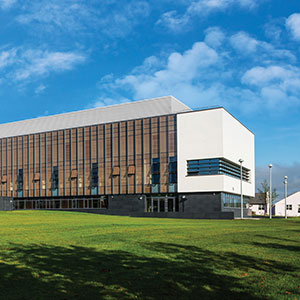
Colleges & Schools
University of Galway has earned international recognition as a research-led university with a commitment to top quality teaching across a range of key areas of expertise.
-
Research & Innovation
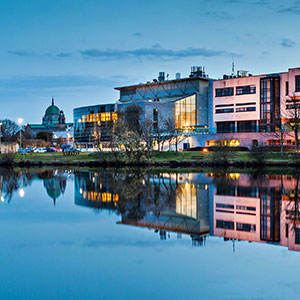
Research & Innovation
University of Galway’s vibrant research community take on some of the most pressing challenges of our times.
-
Business & Industry
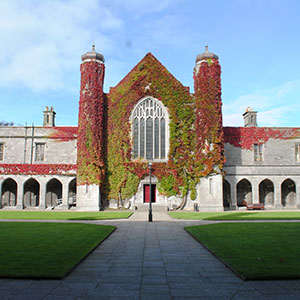
Guiding Breakthrough Research at University of Galway
We explore and facilitate commercial opportunities for the research community at University of Galway, as well as facilitating industry partnership.
-
Alumni & Friends
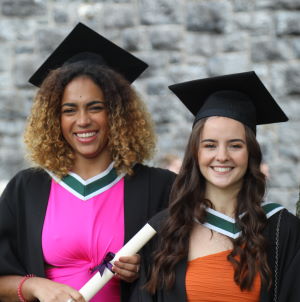
Alumni & Friends
There are 128,000 University of Galway alumni worldwide. Stay connected to your alumni community! Join our social networks and update your details online.
-
Community Engagement
Community Engagement
At University of Galway, we believe that the best learning takes place when you apply what you learn in a real world context. That's why many of our courses include work placements or community projects.
 Accessibility & Language
Zoology
Course Overview
Research in the Zoology Department is mainly concentrated in the following broad areas: evolutionary biology, including the evolution of animal development; ecological parasitology; aquaculture and fisheries management; ecology, behaviour, and conservation of a variety of animal groups, including: inshore marine and freshwater fish; mammals and birds, especially squirrels, bats, and game birds; centipedes (both coastal and inland species); introduced aquatic organisms (such as zebra mussels).
Programmes Available
MSc, full-time and part-time
Applications are made online via the NUI Galway Postgraduate Applications System.
Associated
Learning Outcomes
Entry Requirements
Candidates for the degree of PhD or MSc by research must have reached a high honours standard (minimum H2.2 [or equivalent international qualification] for an MSc) at the examination for the primary degree or presented such other evidence as will satisfy the Head of School and the College of his/her fitness.
Who’s Suited to This Course
Current research projects
Current funded research opportunity
Work Placement
Related Student Organisations
Career Opportunities
Find a Supervisor / PhD Project
If you are still looking for a potential supervisor or PhD project or would like to identify the key research interests of our academic staff and researchers, you can use our online portal to help in that search
Research Areas
Extreme marine environments—Prof. Louise Allcock
Dr Allcock works on Extreme marine environments, Antarctica and the deep sea. She is interested particularly in the benthic fauna of submarine canyon systems and is fascinated by cephalopods, especially their evolution.
Health-Immunity-Disease axis in Invertebrates – Dr Christopher Coates
Dr Coates’ interests span infectious and non-infectious diseases of marine invertebrates, notably crustaceans, and exploring alternative in vivo model’s systems for in vivo toxicology testing, such as insect larvae (Galleria mellonella).
Molecular Parasitology - Prof. John P. Dalton
The Molecular Parasitology Laboratory (MPL) investigates the biology of parasitic worms and protozoa that affect human and animal health worldwide. Our research focuses on understanding host–parasite interactions at the molecular level, with the aim of developing improved diagnostics, vaccines, and treatments for parasitic diseases of global significance.
Venom systems in terrestrial arthropods—Dr Michel Dugon
Dr Dugon is interested in the evolution, development and ultrastructure of venom systems in terrestrial arthropods, particularly centipedes and arachnids.
Macroecology – Dr. Kevin Healy
The Galway Macroecology group focuses on exploring the large-scale patterns that govern the ecology and evolution of animals. We use a combination of comparative, analytical and simulation modeling approaches to test questions ranging from topics including life history, venom potency evolution, trophic ecology and time perception
Benthic ecology—Dr Bob Kennedy
Dr Kennedy is a benthic ecologist researching how macrofaunal community structure and behaviour are linked to bioturbation in soft sediments. He uses sediment profile imagery (SPI) to study these processes in situ.
Ecology of invasive species—Dr Colin Lawton
Dr Lawton is a mammal ecologist particularly interested in the ecology of invasive species such as the grey squirrel and the conservation of native species such as the endemic Irish stoat.
Evolution of marine sponges—Prof. Grace McCormack
Dr McCormack is an evolutionary biologist currently focusing on the evolution of marine sponges. She is also interested in the causes and spread of diseases including HIV in humans, pathogens and parasites in bees and the adaptive evolution of honeybees.
Honey bee pests, parasites, and other pathogens - Dr Helen Mooney
Dr. Mooney is a microbiologist interested in honey bee pests, parasites, and other pathogens. She is a certified lecturer with the Federation of Irish Beekeepers Associations and lectures on the Diploma in Apiculture. She teaches on modules including entomology, behaviour and communication in social insects, apiary management, honey bee products and runs a module and microcredential on honey bee health. Helen has been keeping bees for 15 years and teaches all aspects of beekeeping on the Diploma, at local level, and at summer schools."
Sustainable fisheries, aquaculture and community ecology—Dr Anne Marie Power
Dr Power is interested in sustainable fisheries, aquaculture, community ecology and impacts of climate change, and in marine natural products —particularly the potential of barnacles to yield wet-setting glue for medical purposes.
Researcher Profiles
To find out more about the academic Staff and researchers in the School of Natural Sciences see the Staff List - University of Galway
Course Fees
Fees: EU
€5,750 p.a. (€5,890 including levy) 2026/27
Fees: Non EU
€15,000 p.a. (€15,140 including levy) 2026/27
Extra Information
EU Part-time: Year 1 €4,250 p.a. (€4,390 including levy) 2026/27
All students, irrespective of funding, must pay the student levy of €140.
Contact Us
Ms. Anne Cryan
T: +353 91 492 323
E: zoology@universityofgalway.ie
www.nuigalway.ie/zoology
Related links:
 Scholarships
 Research
 Graduate Studies Office